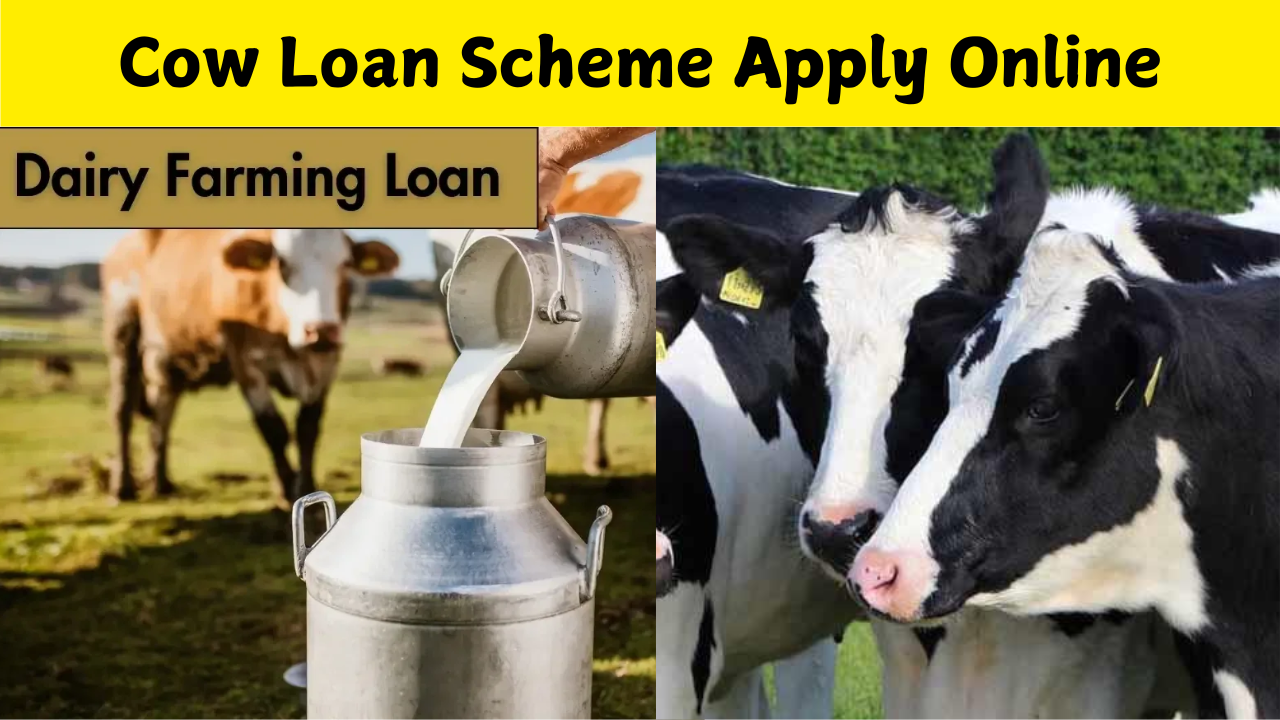
Introduction
Livestock plays a major role in the Indian agricultural economy. Cows are not only a source of milk and dairy products but also a means of livelihood for millions of farmers. To encourage animal husbandry and dairy farming, the government and several banks provide financial support in the form of cow loans. These loans help farmers purchase high-yielding cows, build sheds, buy feed, and manage veterinary expenses. This article explains how to apply for a cow loan, the eligibility, documents required, and the benefits involved.
What is a Cow Loan
A cow loan is a type of agricultural loan or livestock loan provided by banks, cooperative societies, and microfinance institutions. The main purpose is to promote dairy farming and ensure farmers have sufficient financial support to maintain cattle. The loan covers the purchase of cows, fodder, insurance, medical care, and infrastructure related to dairy farming. The primary objective of a cow loan is to support rural farmers in starting or expanding dairy businesses. With financial aid, farmers can invest in high-quality breeds, increase milk production, and generate regular income. It also improves the availability of milk and milk products in rural and urban markets, contributing to both farmer welfare and national development.
Government Schemes for Cow Loans
The central and state governments run several schemes to support dairy farmers. The NABARD Dairy Entrepreneurship Development Scheme (DEDS) and other state-sponsored subsidy programs reduce the burden of repayment by offering subsidies on loans. These schemes are aimed at encouraging small farmers, women entrepreneurs, and self-help groups to actively participate in dairy farming.
Eligibility Criteria for Cow Loan
To apply for a cow loan, the applicant must be an Indian citizen engaged in farming or dairy-related activities. Both individual farmers and groups such as self-help groups or cooperative societies can apply. The minimum age requirement is usually 18 years. Applicants must show proof of residence and demonstrate their ability to repay the loan through dairy activities.
Documents Required for Cow Loan Application
Applicants are required to provide identity proof, address proof, income proof, land ownership documents or lease papers, and photographs. In addition, a project report detailing the number of cows to be purchased, estimated milk production, and expected income is often required by banks. This project report helps banks assess the feasibility of the loan.
How to Apply for a Cow Loan
The cow loan application can be made online through the official websites of nationalized banks, cooperative banks, and microfinance institutions. Farmers can also visit their nearest bank branch to submit an application form along with required documents. Once the application is verified, the loan is sanctioned and the amount is credited to the applicant’s bank account. The loan amount depends on the number of cows to be purchased, their breed, and the overall project cost. Banks usually finance up to 75–85 percent of the total cost, while the rest has to be borne by the farmer. Repayment terms are flexible, generally ranging from three to seven years, depending on the bank’s policy and the borrower’s repayment capacity.
Interest Rate on Cow Loan
Interest rates on cow loans vary between banks and financial institutions. Nationalized banks often provide loans at subsidized interest rates, especially under government schemes. Women farmers and members of self-help groups may get additional benefits and lower interest rates to encourage entrepreneurship. The National Bank for Agriculture and Rural Development (NABARD) plays a major role in providing subsidies for cow loans. Under NABARD’s dairy development schemes, farmers can get subsidies ranging from 25 to 33 percent depending on their category. This reduces the overall repayment burden and motivates farmers to expand dairy farming activities.
Insurance for Cows
Most banks and government schemes make it mandatory to insure the cows purchased through loans. Insurance protects the farmer from financial loss in case of accidental death or diseases. The premium for cow insurance is low and is often included in the loan scheme itself. A cow loan provides farmers with easy access to funds without the need for heavy collateral. It helps improve milk production, increases household income, and creates employment opportunities in rural areas. Farmers can expand their dairy farms, buy modern equipment, and provide better nutrition and healthcare to their cattle.